
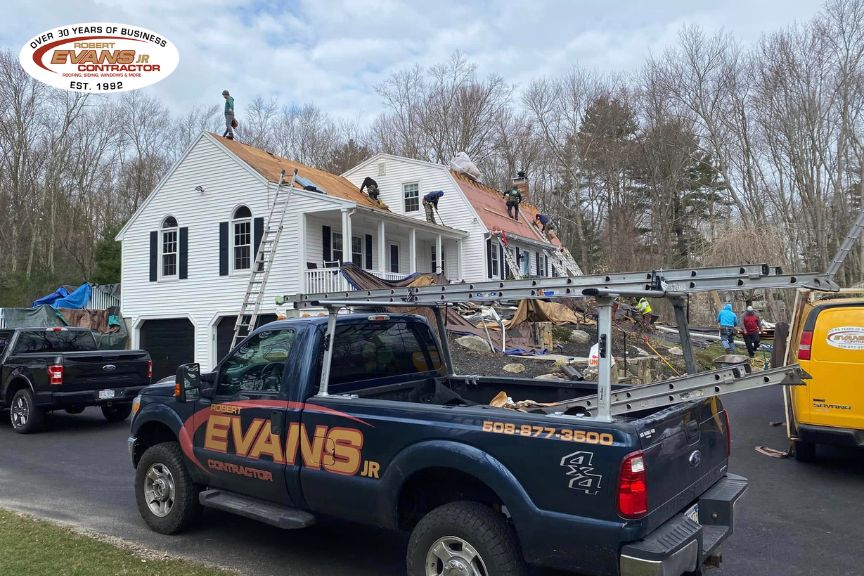
Hiring a roofing contractor is a big decision. Whether you need a roof repair or a complete replacement, the quality of the work will affect how well the roof protects your home for years to come.
But comparing roofing companies involves more than looking at estimates and choosing the lowest price. You need to know who you’re hiring, what is included in the project, and whether the contractor will stand behind their work.
Before signing a contract, ask each roofing company the same questions. Their answers can help you compare contractors, spot potential red flags, and choose a roofer you can trust.
Ask these 15 questions when interviewing roofing contractors, and download our free roofing contractor checklist so you can keep track of their answers.
Questions to Ask a Roofing Contractor Before Hiring Them
1. What Is Your Legal Business Name?
Before you even get started, make sure you’re dealing with a legitimate business. So, ask the roofer for their full business name and take a minute to check that the company is registered with the state to see if they’ve got the proper insurance and licenses.
In Massachusetts, you can use the state’s corporate database to look up the business. This simple check can help you see if the roofer you’re considering is a legitimate business that’s been around for a while, rather than a fly-by-night operator who’s not playing by the rules.
And watch out for any contractor who’s being evasive about their business name or makes it hard to verify the company.
2. How Long Have You Been in Business?
When you’re trusting someone with your roof, which is a pretty major responsibility, experience really counts for a lot. A contractor who’s been in business for many years will have learned a thing or two about all sorts of different roofing systems. They will have seen their fair share of problems, so they’ll be able to handle the unexpected.
But of course, it’s not just about how long they’ve been in business. It’s also about what they’ve actually done with all that time. So take a closer look at their experience, dig up some references, look at what other people have said about their work, and see what the local community thinks of them.
3. Who Owns the Company, and How Long Have They Owned It?
And also it’s good to know who is behind the roofing company
Long-term ownership is often a sign of stability. A contractor who has built and maintained a business over many years has a strong incentive to protect their reputation and maintain good relationships with customers.
If the company recently changed ownership, ask whether the crews, management, warranties, or business practices have changed as well.
4. Are You Properly Licensed and Insured?
You should only work with licensed contractors. Don’t assume that a roofing contractor is licensed and insured. Ask for proof and verify it before work begins.
Roofing contractors should carry adequate liability and workers’ compensation insurance. Such insurance is important because accidents and damage to property occur, even when experienced professionals are performing the work.
Workers’ comp usually covers employees injured on the job, while liability insurance protects you if the contractor damages your property.
Ensure that your contractor is licensed and registered if required in your area. Licensing and registration are different from area to area.
5. Are You a Local Roofing Contractor?
Working with a local roofing company that’s been in the area for a while has its perks. A local roofing contractor will understand the area’s building codes, permits, and local weather patterns.
Being close by is also handy if you need any warranty work done or you have a problem right after the job is finished.
Choosing a local roofing contractor is important after major storms, when out-of-state workers are traveling from one storm-battered place to the next looking for work.
So be sure the company you’re considering has roots in your local community before you give them your business.
6. Will You Give Me a Detailed Written Estimate?
If you are looking for a good roofer, you need to track down someone who is happy to provide a written estimate upfront that lets you know exactly what you’re in for in terms of cost and what you can expect to get.
This written estimate should give you a clear idea of what’s included, starting from the scope of the whole job right through to the materials they’ll use, how much their labor will cost, and who will be responsible for getting rid of the old roof when the job’s done. And it should also include any other expenses you might have to pay for, such as permits or inspections.
You should also get them to explain how they’d handle any unexpected expenses that pop up. What if they find that the roof decking underneath the old shingles is rotted? Ask how they will price these extra repairs and how you’ll be notified about them.
A detailed estimate makes it a lot easier to compare different contractors fairly. One estimate might look cheaper because it left out some important pieces of the project.
7. Will You Provide a Written Contract?
Don’t put all your trust in a good faith handshake when it comes to a major roofing project.
Your contract needs to lay out in clear terms the scope of work, the materials being installed, the total project cost, how and when you’ll be paying, the expected timeline for the job, and what the warranty looks like.
Take a close look at the contract, and don’t hesitate to ask questions about areas that don’t make sense to you. You want to make darn sure you and your roofer are on the same page before work even begins.
8. Do You Offer a Warranty for Materials and Workmanship?
Roofing warranties can cover both the roofing materials and the actual work put into installing them.
First off, ask what kind of warranty comes with the shingles and all the other roofing gear from the manufacturer. Then, ask your contractor if they’ve got a separate workmanship warranty to back up their installation skills.
Find out how long each warranty lasts, what it covers, and what steps you need to take if a problem arises.
9. Can You Help With an Insurance Claim?
If your roof was damaged by wind, hail, a fallen tree, or another covered event, ask if the contractor has experience working with homeowners on the insurance claims process.
An experienced roofing contractor can document roof damage, provide details your insurance company needs, and explain repairs needed.
The contractor is not your insurance company and cannot determine whether your claim will be covered, but their experience can make navigating the repair process easier.
10. Can You Provide References From Previous Customers?
A reputable roofing contractor should be able to give references from former customers.
But don’t stop there. Look at online reviews and pay attention to patterns in what customers say about communication, workmanship, cleanup, and how the company responds when something goes wrong.
A few negative reviews among hundreds of positive ones aren’t necessarily a reason to reject a contractor. Instead, read how the company responded. Problems can happen. How a contractor handles them can tell you a lot about the company.
11. Will You Handle the Necessary Permits?
Getting the right permits is an important step in making sure your roofing project is compliant with local building codes and regulations. When a roofing company gets the necessary permits, it’s proof that they’re serious about doing things right and following the rules. The end result is that you get a roof that meets all local regulations for quality and safety.
It’s important that the contractor pulls the permit, not the homeowner. If you go ahead and pull the permit yourself, guess who gets to deal with any damage or injuries that turn up on the job site? You do, that’s who. If the roofer gets the permit, you can let them handle any issues that arise. This way, you can relax knowing the project is good, legal, and that the roofer will handle anything that goes wrong.
12. Do You Use Employees or Subcontractors?
You might’ve heard a roofer hire subcontractors for projects, and that’s not always a bad thing. What really matters is knowing who’s going to be on your property working on your house. Who’s responsible for making sure everything runs smoothly and stays on budget?
If a roofer uses subcontractors, ask them about the history of the team, how long they’ve been working with that group, and whether they’ve got proper insurance to protect you and your property.
You also need to know who you can turn to when you have questions and who’s ultimately going to make sure the job gets done right.
13. Will You Inspect My Roof Before Providing an Estimate?
A roofing estimate is only good if it reflects what’s really going on with your roof, not just how it looks from the driveway.
Ask what the contractor’s inspection includes. Depending on your home and roofing problem, an inspection may include the shingles, flashing, roof penetrations, decking, and attic.
An attic inspection can reveal signs of leaks, excessive moisture, poor ventilation, and other problems not always visible from the outside.
The more your contractor really knows about the state of your roof right now, the more accurate the price quote will be.
14. Will You Remove the Old Shingles or Just Roof Over Them?
Ask the contractor exactly how they plan to install your new roof.
In some cases, you might be able to add another layer of shingles even if the local building codes allow it. But pulling off the existing roof is a great chance for the contractor to check to see if there is rot or damage to the roof deck. And that’s a problem you really want to know about before you put new roofing on.
If a contractor recommends installing new shingles over the existing roof, ask why he thinks this approach is a sensible idea for your house.
Your contractor should be able to walk you through the pros and cons of putting new shingles over the old ones, along with all the relevant building code requirements, so you can make a smart decision.
15. Will You Clean Up the Site and Remove Old Materials?
Roof replacement creates a lot of debris. Before work starts, find out how the roofing crew will protect your home and property.
Ask about landscaping, siding, windows, driveways, and outdoor equipment. You should also know how the crew will collect and remove old shingles, nails, and other debris.
Be sure your estimate specifically includes cleanup and disposal so there are no surprises when the project is finished.
Compare Roofing Contractors With Confidence
The contractor you choose can be just as important as the roofing materials you select. A quality roof depends on proper installation, attention to detail, and a company willing to stand behind its work.
Don’t be afraid to ask questions. A good roofer should have no problem talking about their experience, insurance, how they’ll do the job, warranties, and pricing.
And don’t automatically choose the lowest estimate. Compare what each contractor is actually providing and look at the complete picture: experience, reputation, materials, workmanship, communication, and warranty protection.
Download our free Questions to Ask a Roofing Contractor Checklist and bring it with you when meeting with roofing companies. You’ll have all 15 questions in one place and space to compare their answers before making your decision. And contact us for an estimate, or if you’d like us to answer these questions for you.


