
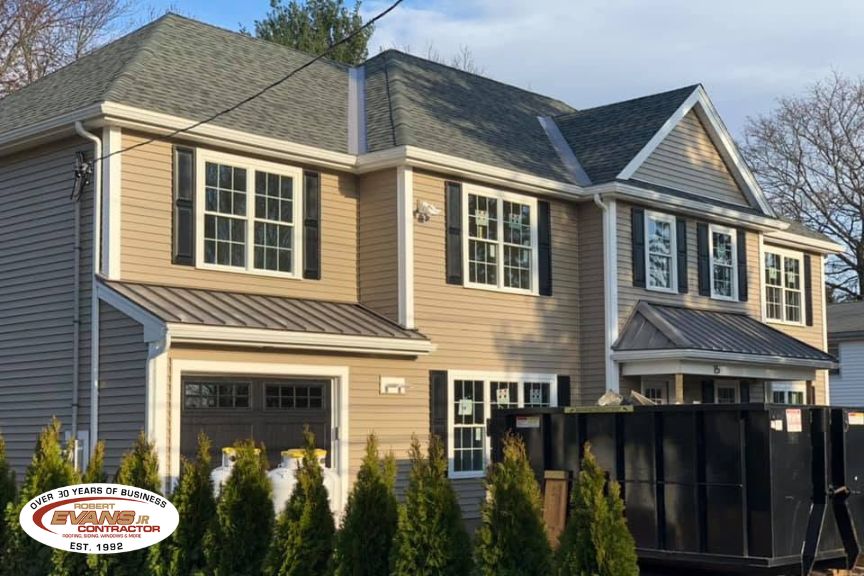
Is the exterior of your home looking faded, worn, or simply outdated? New siding can dramatically improve the appearance of your home while providing an important layer of protection against New England weather.
Vinyl siding is a popular choice for homeowners because it combines durability, easy maintenance, attractive design options, and affordability. Whether you want to refresh your home’s curb appeal, reduce exterior maintenance, or prepare your home for resale, vinyl siding can be a worthwhile investment.
Vinyl Siding Has Come a Long Way
Vinyl siding was introduced in the 1950s as an alternative to aluminum and traditional wood siding. Early vinyl products didn’t always perform well. They could fade in the sun, buckle or sag in the heat, and become brittle and crack.
Today’s vinyl siding has improved drastically. Progress in materials and production has produced stronger, more appealing items that can survive weather changes and keep their beauty for many years.
Homeowners also have far more choices than they did in the past. Modern vinyl siding is available in a wide range of colors, profiles, textures, and styles that complement everything from traditional New England homes to more contemporary designs.
Why Choose Vinyl Siding for Your Home?
Your siding does much more than make your home look appealing. It helps protect the structure from rain, snow, wind, moisture, and other elements. When siding becomes damaged or deteriorated, your home’s exterior may become more vulnerable to moisture and other problems.
Replacing old siding with quality vinyl siding can improve both the protection and appearance of your home. Here are nine benefits to consider.
1. Affordable
Vinyl siding is generally one of the more affordable siding options compared with materials such as wood, brick, or fiber cement. It can provide a significant exterior transformation without the higher material and ongoing maintenance costs associated with some alternatives.
The value doesn’t end with the initial installation. Because vinyl doesn’t require regular painting or staining, homeowners can also save money on maintenance over the life of the siding.
Replacing worn siding can also make your home more appealing to prospective buyers. According to Remodeling Magazine’s 2025 Cost vs. Value report, replacing your siding with vinyl results in an increase in the resale value of $16,314. The average job cost in New England is $17,590. Basically, you recoup 92.7% of your investment.
A well-maintained exterior creates a strong first impression and can help protect the value of your home.
2. Can Improve Energy Efficiency
Siding is only one part of your home’s exterior system, but installing new siding provides an opportunity to improve insulation and address areas where air may be leaking.
Insulated vinyl siding or adding insulation beneath new siding can help reduce heat transfer through exterior walls. This can help your home stay more comfortable during cold New England winters and hot, humid summers.
If energy efficiency is a priority, speak with your siding contractor about the available insulation options and what makes sense for your home.
3. Enhances Curb Appeal
Few exterior projects can change the look of your home as quickly as new siding. If your existing siding is faded, stained, damaged, or outdated, replacing it can give your entire home a fresh appearance.
Today’s vinyl siding comes in an extensive selection of colors and styles, making it easier to coordinate your siding with your roof, windows, doors, shutters, and trim.
Because the color is part of the siding material, you won’t have to worry about paint peeling or chipping as it ages.
4. Strong and Durable
Your home’s exterior takes a beating throughout the year, particularly in New England, where it needs to handle everything from summer heat and thunderstorms to freezing temperatures, snow, ice, and strong winds.
Quality vinyl siding is designed to stand up to these changing conditions. When properly installed, it can provide reliable exterior protection for decades.
Vinyl is also resistant to many of the problems that affect wood siding. It won’t rot, and insects can’t eat through it the way they can damage wood products.
5. Resistant to Moisture
Moisture is one of the biggest threats to a home’s exterior. Wood siding can absorb moisture if it isn’t properly maintained, potentially leading to rot and deterioration.
Vinyl itself does not absorb water. A properly installed vinyl siding system is designed to help manage water that gets behind the panels so it can drain away rather than remain trapped against the structure.
Proper installation is important. Siding works together with house wrap, flashing, trim, and other components to create an exterior system that helps protect your home from moisture intrusion.
6. Requires Very Little Maintenance
One of the biggest benefits of vinyl siding is how little maintenance it requires.
Unlike wood siding, vinyl doesn’t need to be regularly scraped, painted, or stained. For most homeowners, occasional cleaning is all that’s necessary to keep it looking good.
Dirt, pollen, mildew, and other surface buildup can usually be removed with water and a mild cleaning solution. That means less time maintaining your exterior and fewer ongoing maintenance expenses.
7. Efficient to Install
Vinyl siding is lightweight and designed with interlocking panels, making installation relatively straightforward for an experienced siding contractor.
The material can be cut and fitted around windows, doors, corners, and other architectural features. Because the panels are manufactured for consistent installation, they can create a clean, uniform exterior.
However, proper installation matters. Vinyl expands and contracts as temperatures change, so panels must be installed correctly to allow movement and prevent buckling or warping.
8. Offers Plenty of Design Options
Choosing vinyl no longer means settling for a basic exterior.
Modern vinyl siding comes in a variety of profiles, textures, colors, and finishes. Homeowners can choose traditional horizontal siding, vertical panels, shake and shingle styles, and products designed to recreate the appearance of natural wood.
You can also use contrasting trim, decorative accents, shakes, or different siding styles to highlight architectural features and give your home more character.
With so many combinations available, you can create an exterior that complements your home’s architecture while reflecting your personal style.
9. Backed by Manufacturer Warranties
Many quality vinyl siding products come with extensive manufacturer warranties. Depending on the manufacturer and product line, warranties may provide protection against certain manufacturing defects or product failures.
Some manufacturers also offer transferable warranties, which may be an added benefit if you decide to sell your home.
Warranty coverage varies, so be sure to understand what is covered, how long the coverage lasts, and whether there are specific installation or maintenance requirements.
Is Vinyl Siding a Good Investment for Your Home?
For many homeowners, vinyl siding provides a practical balance of appearance, durability, affordability, and easy maintenance. It can refresh an aging exterior while helping protect your home against New England’s changing weather.
The quality of the siding matters, but so does the quality of the installation. Proper flashing, moisture management, ventilation, and installation techniques all contribute to how well your new siding performs over time.
If your current siding is faded, cracked, loose, damaged, or becoming increasingly difficult to maintain, it may be time to consider replacement. Contact Robert Evans Roofing to discuss your siding options and determine whether vinyl siding is the right choice for your home.


