
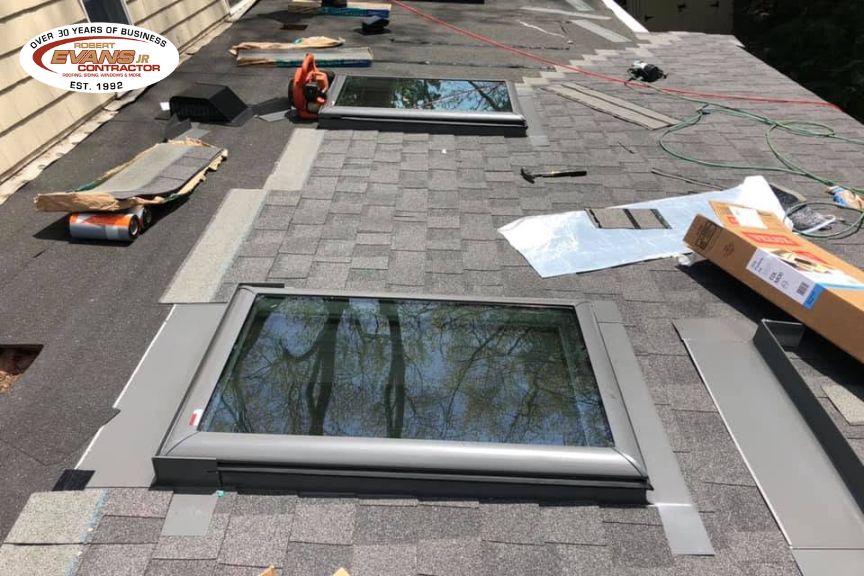
Skylights are a great way to bring more natural light into your home. Suddenly a dark hallway isn’t quite so dingy, rooms can feel a lot bigger when you get some proper light coming in, and if you go for a model that opens up, you can add some fresh air into the mix.
But let’s say you’re looking at installing or replacing a skylight. There’s a choice you might not have thought about just yet: Do you choose a curb-mounted or a deck-mounted skylight?
Both options will give you years of reliable service if properly installed. The main difference is how they attach to your roof. Understanding curb-mounted vs. deck-mounted skylights can help you choose the right option for your home and roofing system.
What Is a Curb-Mounted Skylight?
A curb-mounted skylight sits on top of a raised frame, called a curb, that is built around the roof opening. Think of the curb as a little box that sticks up a bit above the roof surface. The skylight fits over this frame and gets bolted into it.
The curb becomes part of the roofing system, so you need to make sure it’s properly flashed and watertight. You don’t want water and melting snow getting under the rest of the roofing materials.
One of the good things about a curb-mounted skylight is that if the existing one needs to be replaced, you can usually just swap it without having to go back in and rebuild the entire opening. As long as the existing curb is properly constructed and in good condition, you can just install the new skylight on top of it.
Curb-mounted skylights are commonly used on flat and low-slope roofs because raising the skylight above the roof surface helps manage water flow away from the skylight.
Advantages of Curb-Mounted Skylights
Curb-mounted skylights offer several benefits:
- Installation flexibility is a big advantage. They can be used with any sort of roofing system and are particularly useful on low-slope roofs.
- They sit above the roof surface. Having the curb there helps keep the skylight out of the path of water running across the roof.
- You have some flexibility when you need to replace them. You can often reuse an existing curb if you need to swap out the skylight.
- There are custom sizing options if you need them. Curb-mounted skylights are a good choice if you’re dealing with an existing roof opening that’s not standard.
The tradeoff is that you have to build and flash the curb, which adds a bit more complexity to the installation.
What Is a Deck-Mounted Skylight?
A deck-mounted skylight attaches directly to the roof deck rather than sitting on a separate raised curb. The skylight frame is designed to work with your roof and flashing system.
Because the skylight sits lower and closer to the roofline, deck-mounted skylights have a nice clean, streamlined look.
Deck-mounted skylights are often installed on sloped residential roofs with asphalt shingles and other compatible roofing materials. However, the roof must meet the skylight manufacturer’s minimum slope requirements.
Advantages of deck-mounted skylights
Homeowners like deck-mounted skylights because they offer:
- A lower profile. The skylight sits right up against the roof.
- Integrated installation with the rest of the roof. The skylight, flashing, and roofing materials work together as a complete system.
- Fewer components. You don’t have to build a separate curb.
- A good fit for sloped residential roofs. Deck-mounted skylights work particularly well with many asphalt shingle roofing systems.
Proper installation is still important. The skylight must be correctly positioned, properly flashed, and integrated with the roof so water can’t get in.
Curb-Mounted vs. Deck-Mounted Skylights: What’s the Difference?
The main difference is how the skylight connects to your roof.
A curb-mounted skylight sits on top of a raised structure built above the roof deck. A deck-mounted skylight attaches directly to the roof deck and has a lower profile.
Which one is better for you depends on what condition your roof is in.
For a typical steep-slope asphalt shingle roof, a deck-mounted skylight can look attractive, and the installation blends into the roofline. But if you have a flat or low-slope roof, or there’s already a skylight curb in place, a curb-mounted model might be a better bet.
Other factors to consider when making the choice include:
- Roof pitch
- Roofing material
- Existing skylight opening
- Manufacturer installation requirements
- Local weather conditions
- Skylight size
- Whether you’re installing a new skylight or replacing an existing one
Your roofing contractor can take a look at your roof to figure out which method of installation is going to be best for the job.
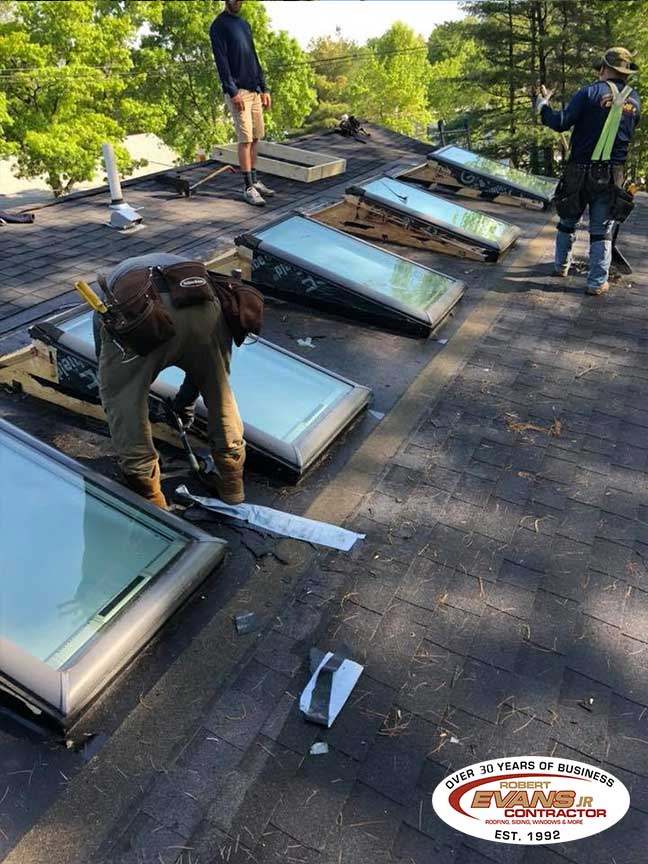
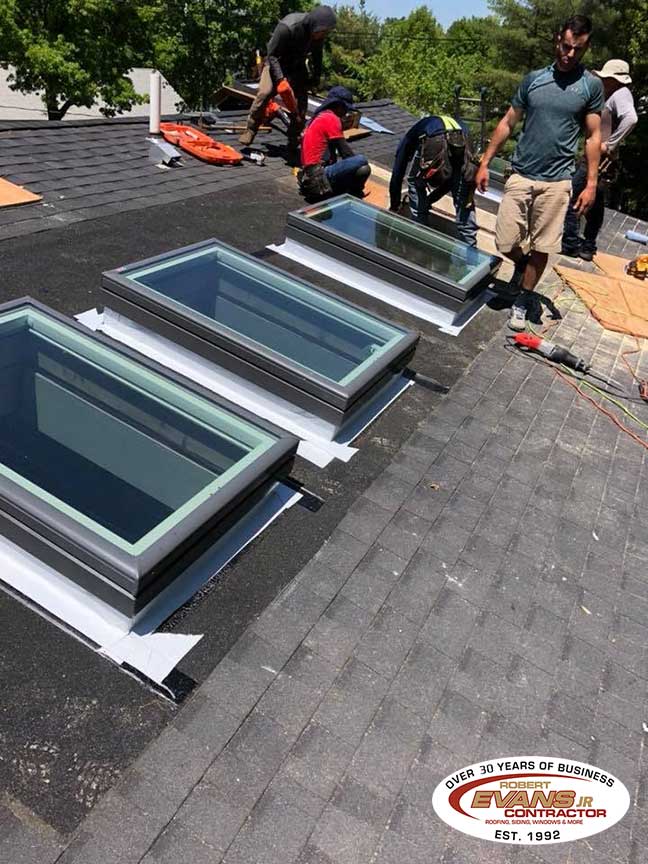
Don’t Overlook the Skylight Flashing
No matter which type of skylight you choose, proper flashing is one of the most important parts of the installation.
Flashing directs water around the skylight and back onto the roof. If it is missing, damaged, or improperly installed, water can work its way underneath your shingles and eventually into your home.
This is particularly important in New England, where a roof has to handle heavy rain, snow, ice, and repeated freeze-and-thaw cycles.
Signs that you may have a skylight or flashing problem include:
- Water stains around the skylight
- Damp or damaged drywall
- Peeling paint
- Condensation that doesn’t go away
- Visible damage around the skylight
- Water entering during heavy rain or melting snow
A leaking skylight doesn’t always mean the skylight itself has failed. The problem could be the flashing, roofing materials, or installation around it. Have a roofing professional inspect the area before deciding what needs to be replaced.
Should You Replace Skylights When You Replace Your Roof?
If you’re planning a roof replacement and have older skylights, it’s a good time to evaluate them.
Your contractor already needs to remove the roofing materials around the skylights and install new underlayment, shingles, and flashing. Replacing an aging skylight at the same time can help you avoid disturbing your new roof a few years later if the skylight fails.
That doesn’t mean every skylight needs to be replaced when you replace your roof. Its age, condition, and installation should all be considered.
If your existing skylight is showing signs of deterioration or is approaching the end of its expected service life, replacing it as part of the roofing project may be the more practical choice.
Which Type of Skylight Is Best for Your Home?
There isn’t one type of skylight that’s best for every roof.
Curb-mounted skylights can be a good choice for low-slope roofs, custom openings, and situations where an existing curb can be reused.
Deck-mounted skylights are a popular option for sloped residential roofs because they integrate directly with the roof and provide a clean, low-profile appearance.
More important than choosing one mounting style over the other is making sure the skylight is appropriate for your roof and installed correctly.
Get Professional Help With Your Skylight Installation
A skylight creates an opening in one of your home’s most important protective systems. Even a high-quality skylight can leak if you don’t install the opening, underlayment, or flashing correctly.
If you’re replacing your roof, installing a new skylight or dealing with an older skylight that has started leaking, have an experienced roofing contractor inspect the roof first. They can determine whether a curb-mounted or deck-mounted skylight is the better fit and make sure the skylight is properly integrated into your roofing system.
The right skylight and a quality installation can give you the natural light you want without compromising the protection your roof provides.


